
Several BJP-backed state governments have unveiled schemes targeting the poor, women, farmers and students, following the party's setback in the Lok Sabha polls.

Alloting more funds for MNREGA and PM-KISAN could wipe out the entire additional money that the Centre may have for FY25.

Milk supplies could improve with the monsoon, provided the rains are not excessive.

As a panel of senior ministers deliberates on the need to review curbs on exports of some rice varieties, data shows that since outbound shipments saw restrictions in July-August last year, the non-basmati segment has suffered more than basmati exports. Sources said the panel is expected to soon deliberate on a few suggestions to ease the export curbs on some rice varieties due to higher-than-required stocks in the central pool. The panel, some observers feel, may also postpone the decision to ease the export curbs till a firm picture emerges on the latest kharif paddy sowing.

India has flagged concerns over non-tariff barriers (NTBs) faced by its exporters with the Russian government, commerce secretary Sunil Barthwal said on Monday. NTBs faced by Indian exporters are mainly in sectors such as marine products and pharmaceuticals.

India's trade deficit with Russia continued to widen for the second consecutive year to $57 billion in the financial year 2023-24 (FY24), with Moscow becoming New Delhi's largest source of crude oil imports. All eyes will now be on Prime Minister Narendra Modi's visit to Russia during July 8-9, where he is set to meet President Vladimir Putin. This will be Modi's first visit to the Kremlin since the Russia-Ukraine conflict began over two years ago.

The government-backed Open Network for Digital Commerce (ONDC) is likely to start levying user charges in the current financial year.

The government is expediting visa-related issues to bring technicians to India from any country, not just China, as and when required, to ensure the smooth implementation of the flagship production-linked incentive (PLI) scheme aimed at boosting domestic manufacturing. "If those under the PLI scheme need to get their equipment installed, we try to expedite the ability to get technicians into India from any country, whichever it may be," Union Commerce and Industry Minister Piyush Goyal told Business Standard in an interview.

To burnish production-linked incentive (PLI) schemes, the government is considering an overhaul of some of them relating to sectors such as textiles and pharma, and making incentive payments quarterly, officials in the know said. In a bid to cut the delay in processing incentive claims, the government is looking at switching to a quarterly disbursement of incentives. Currently, in most schemes, incentives are annual.

The commerce department has reaffirmed its plans to launch the 'Trade Connect' e-platform to help exporters connect with stakeholders of international trade, as a part of the new government's 100-day action plan, a senior government official said.
Another priority in the first 100 days could be the launch of an e-platform -- Trade Connect -- to help exporters connect with stakeholders of international trade.
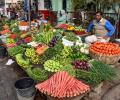
Increased production of pulses, oilseeds, and cereals will help boost domestic supplies and contribute to keeping inflation low in the coming months.
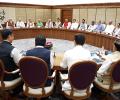
'The expeditious enactment of labour codes and strategic measures to bridge the skills jobs gap are critical.'

'The youth is stressed and students are depressed.'

The Met department blamed the malfunctioning of sensors kept at the Automated Weather Station for the gaffe.

The rains after arriving over Kerala will quickly cover Tamil Nadu and Karnataka, but then might slacken a bit, which could delay its arrival over Northwest India.

High vegetable prices are expected to keep food inflation firm in the months to come.

As Chandigarh braces for a fierce contest between Congress candidate Manish Tewari and the BJP's Sanjay Tandon, its industry leaders harbour a fervent wish: Replicate the success of the National Capital Region model in this Union Territory.
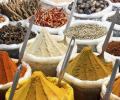
The government is formulating guidelines on the use of ethylene oxide (ETO) in samples of spices for the domestic market and exports, people aware of the matter said, as it plans to step up efforts to make quality checks more stringent. ETO, a flammable, colourless gas, is typically used as a disinfectant. It is also used as a sterilising agent and an insecticide to reduce microbial contamination in spices. However, its use is considered carcinogenic, beyond permissible limits.
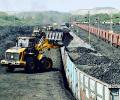
Exports of 19 major commodities, including petroleum products, coal and marine items, saw growth in terms of volume during April 2023-February 2024, even as they witnessed contraction in value terms during the same period. Government officials said the rise in export volume despite a decline in value implies that these commodities show a stronger market demand.
